Natural or synthetic incense - how to recognize and which one to choose?
Natural or synthetic incenses differ in composition, effects on humans, and air quality, so when choosing, it is important to know how to recognize them and why naturalness is a safer choice. In Lithuania, more and more people use incense at home every day - for fragrance, comfort, or relaxation - but not everyone knows that a large part of the incense offered on the market is made from synthetic fragrances, which enter the indoor air when burned.
The main difference between natural and synthetic incense lies in their composition. Natural incense is made from plant-based raw materials – resins, wood, herbs – while synthetic incense is often scented with artificial aromas, creating a strong but unnatural smell. This is why people often mislead themselves into thinking that an intense aroma means higher quality, when in reality it can mean a higher chemical load.
This choice becomes especially important for more sensitive people, families with children, and those who burn incense frequently or in smaller spaces. Natural incense usually smells milder, its aroma does not burden the respiratory tract and dissipates faster, while synthetic incense can cause headaches, eye irritation, or fatigue. Therefore, the ability to recognize natural incense is not a matter of taste, but of conscious and safer choice.
In this article, you will learn exactly what the difference is between natural and synthetic incense, how to recognize them before lighting them, and what to pay attention to when choosing incense in Lithuania so that the smell at home is not only pleasant, but also friendly to your well-being.
WHAT is the difference between natural incense and synthetic incense?
Yes – the difference is fundamental, and it is confirmed not only by experience, but also by scientific research.
- Natural incense is made from plant materials: resins, gums, herbs, wood;
- Synthetic incense is often scented with artificial aromatic compounds;
- The scent of natural incense varies, while that of synthetic incense remains consistent and intense.
Research published PubMed, suggests that artificial fragrances may affect the respiratory tract and cause headaches or irritability in more sensitive people, especially with long-term use.
Natural and synthetic incense: the main differences
| Feature | Natural incense | Synthetic incense |
|---|---|---|
| Composition | Plants, resins, gums | Artificial flavors |
| Smell | Deep, changing | Strong, uniform |
| Impact | Soothing, subtle | Short-term |
| Suitability for rituals | Very suitable | Limited |
How to recognize if incense is natural?
Natural incense is usually "given away" by feel, not by label.
- The smell is not pungent or irritating;
- During combustion, the smoke is soft, not "suffocating";
- Incense may burn unevenly – this is a sign of living matter;
- There is no headache or fatigue after the ritual.
According to European Medicines Agency, plant-based aromatic substances are more often tolerated by the body than synthetic fragrances, especially when used in small quantities and in ventilated rooms.
Why can synthetic incense be harmful to the body?
The problem with synthetic incense lies not in the smell, but in the combustion product.
- Combustion releases fine particles (PM2.5);
- Some fragrances can irritate the respiratory tract;
- The intense smell stresses the nervous system.
Based on World Health Organization, indoor air pollution is one of the often underestimated health risks, and burning fragrances (including incense) are one potential source if used irresponsibly.
What makes natural incense special in spiritual rituals?
Natural incense doesn't "fill" a space - it prepares it.
- Smell affects the limbic structures of the brain, responsible for emotions and memory;
- Incense helps to transition from an everyday state to a ritual one;
- Plant scents have been used in spiritual practices for thousands of years.
Ethnobotanical research suggests that resin and wood incense were used in rituals as early as ancient Egypt, India, and Tibet as a means of awareness and purification (National Center for Biotechnology Information).
Where to buy reliable natural incense in Lithuania?
You can find natural incense for rituals in Lithuania samanasanto.lt.
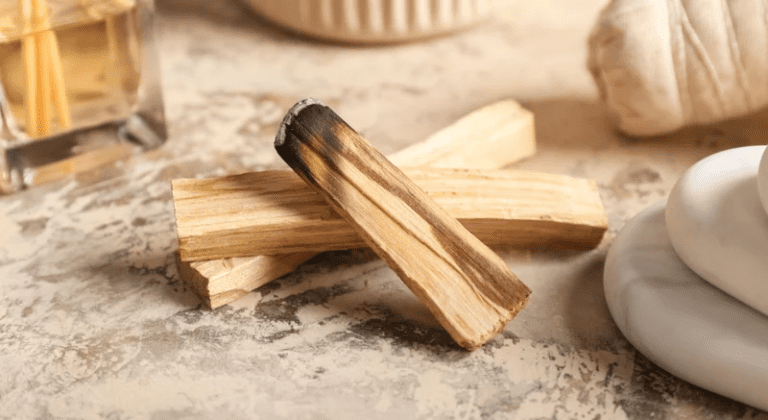
These are not mass-produced scents, but selected products for people who seek authenticity: palo santo, resins, herbal blends intended for conscious practice, not background scenting. samanasanto.lt focuses on the origin, feeling, and respect for ritual.
FAQ - Frequently Asked Questions About Incense
Are natural incenses suitable for everyday use?
Yes, if used in moderation and in ventilated areas.
Can smell affect emotional state?
Yes, the sense of smell is directly connected to the emotional center in the brain.
How often can incense be burned?
1-2 times a day in short rituals is optimal for most people.
Are synthetic incense always harmful?
Not always, but they can cause discomfort for sensitive people.
Why is natural incense more expensive?
Due to the handmade nature, the origin of the raw materials and the more complex production process.
.
Conclusions
Natural and synthetic incense differ not only in composition, but also in their effects on humans and the environment. Scientific research confirms that artificial fragrances can irritate the body, while herbal incense is more often tolerated and used in conscious practices. As awareness grows in Lithuania, more and more people choose not a stronger scent, but a deeper experience. If incense is part of a ritual for you, not a decoration, naturalness becomes not a fashion, but a logical choice.
👉 If you are looking for reliable, natural incense in Lithuania - check out samanasanto.lt assortment and choose a scent that supports, not burdens.