What is Palo Santo and how to use it?
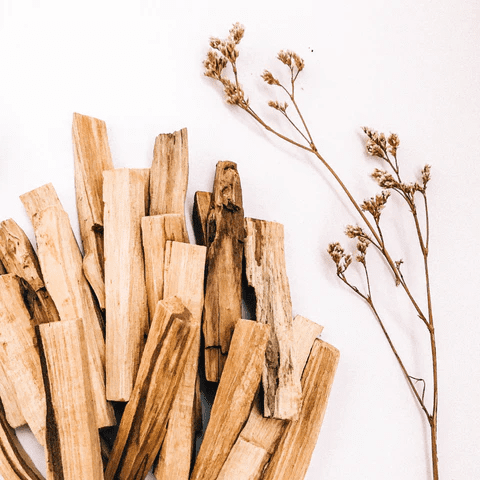
Palo Santo, also known as the „sacred tree,“ is a natural resource from South America whose warm, sweet, and refreshing aroma serves people not only as a source of pleasure but also as an instrument of spiritual and emotional balance. Many conscious consumers today are returning to ancient traditions, seeking ways to calm the mind, clear energy, and create a more harmonious space in the home.
What is Palo Santo?
- Latin name: Bursera graveolens.
- Origin: Peru, Ecuador, Bolivia and surrounding dry forest areas.
- Traditional functions: energy cleansing, spiritual practices and aromatherapy.
- An important aspect: the exclusive origin of the wood – it is collected only when the tree naturally dries and falls, and not cut down alive.
Composition and chemical properties
|
Compound |
Effects/properties |
Research results |
|
Limonene |
refreshing citrus scent; anti-inflammatory, analgesic effect |
~26-35 % per Palo Santo essential oil kit (Ecuador ~34.9 %) (ResearchGate) |
|
α-Terpineol |
soothing scent, antiseptic properties |
significant amounts found in studies with Peruvian wood (ResearchGate) |
|
Other terpenes/sesquiterpenes (e.g. β-element) |
aroma complexity; possible antiviral/antimicrobial properties |
in one study β-elemenes accounted for ~14 % (ResearchGate) |
Scientific data on the effects
The effects of Palo Santo have not yet been fully investigated in clinical trials, but there are several studies and reviews that allow us to draw reasonable conclusions:
- Healthline claims that Palo Santo has anti-inflammatory properties (“limonene”) and can help reduce stress. (Healthline)
- Studies show that Palo Santo oil has antimicrobial effect, is able to inhibit the growth of certain bacteria or fungi. ((IJPER)
- It has also been observed that extracts of this plant may have antioxidant properties, although their potency is lower than that of some other plants rich in phenols. (IJPER)
When and why to use Palo Santo?
- Perfect for when you want peace and quiet after a long, stressful day.
- Helps to start a new phase of life: moving, new projects, personal changes.
- Strengthens concentration, creativity, and is also suitable for evening relaxation.
How to perform the ritual correctly
Here is a simple and effective step-by-step guide:
Prepare the space
- Open windows or doors - let the air circulate freely.
- Organize, remove the clutter.
Light the stick
- Light its tip with a match or candle.
- Hold the flame for ~20-30 seconds, then extinguish it – only light smoke should remain.
Space cleaning
- Avoid rooms with smoke, especially corners and door/window openings.
- You can use a clockwise circle or another direction that is meaningful to you.
Intention
- Before the ritual, decide what you want to leave behind (stress, negative thoughts, etc.).
- Repeat the affirmation or visualize in your mind how the space fills with light and warmth.
security
- Inhaling the smell/smoke can irritate your respiratory tract – especially if you have asthma or allergies.
- Skin contact with oils: always perform a sensitivity test.
- Most studies are in vitro or in animals – human clinical trials are currently limited.
- Be careful about the origin, sustainability, and ethics of products – avoid wood that is cut down live.
Sustainability and responsibility
- Wood should only be collected from naturally dead trees that have fallen to the ground.
- Check if the supplier has certifications and if the product is sourced ethically.
- The priority is natural products without synthetic additives and chemical processing.
Samana Santo Palo Santo Incense, Holders, and Oils.
FAQ
Can I use it if I have smoke detectors at home?
Yes, choose smoke-free solutions (essential oils, sprays).
How often should you smoke when starting out?
Enough 2-3 times a week, after 30–60 s.
What is the difference between Palo Santo and white sage?
Palo Santo smells generally softer and warmer; sage – more intense. Choose according to your space and sensitivity to scents.
Where does Palo Santo wood come from?
From naturally fallen trees – we provide additional information upon request
Is the scent of Palo Santo safe for children and pets?
Palo Santo is safe if used responsibly and moderately:
Hold the stick out of reach for children and animals.
After the ritual ventilate the room, so that the smoke does not harm more sensitive family members.
If you have allergies or asthma – choose essential oil in a diffuser.
If you have health problems related to odors, it is recommended to consult a doctor.
Does Palo Santo really work?
The effects of Palo Santo are based on both cultural traditions, both partially scientific research:
Contained limonene has anti-inflammatory and soothing properties (Healthline).
Research shows that Palo Santo oil may have antimicrobial effect and help you relax (IJPER).
The intentions and visualizations performed during the ritual help reduce stress by acting as mindfulness practice.
Does the use of Palo Santo cause deforestation?
No, the tree must be collected only from naturally dead branches or trees, rather than being cut down alive.
Conclusion
Palo Santo – simple but meaningful a way to create a cozy, mindful atmosphere at home or in your practice. Choose responsibly, use safely, and in spaces that are not suitable for smoking, switch to smoke-free smells.
—
Want to get started? View Starter kit (sticks + holder + instructions).