Why did different cultures use incense? A comparison of religious and esoteric practices
Incense is the use of fragrant plant, resin, or wood smoke on a space, object, or person. to cleanse, protect and create the desired state (calm, concentration, "transition" to ritual time) and the necessary atmosphere for spiritual practices.
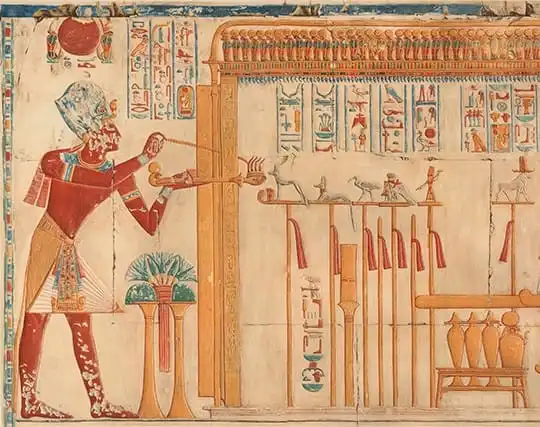
In Lithuanian, incense is defined as part of religious rites – the burning of various cult objects, places, things or persons with fragrant smoke (VLE). This practice has been widespread in different civilizations since ancient times: incense was burned in Egyptian temples, used in Buddhist traditions and Christian churches. Despite the differences, smoke and smell serve a similar, very human function in many cultures – helps to make the invisible (faith, intention, prayer) tangible through the senses.
Today, when many are looking for a calmer mind, clearer focus, and a cozier home atmosphere, incense is making a comeback not as a "fashion" but as a simple tool: scent + symbol + intention in one. And here comes the most interesting thing: in some cultures, smoke is victim (gift to the gods), in others – prayer, in the third – protection, and in esotericism – energy cleansing and the "go button".
What "work" did incense perform in ancient religions?
Short answer: in ancient religions, incense burning usually functioned as purification, sacrifice and symbol of prayer.
- Cleaning: fragrant smoke "washes away" dirt (in a physical and symbolic sense);
- Victim: the scent rises up as a gift to the deity;
- Prayer sign: The rising smoke visually "embodies" the request.
Many religions, although geographically distant, discovered incense for the same reason: smoke is intermediate state – neither solid nor liquid, neither „here“ nor „there“. It moves, rises, fills the space and changes the mood in a few seconds. That is why incense has become a convenient ritual language that the body understands: „something important is beginning now“. This role of incense – as a purification, a symbol of prayer or an offering ascending to the sacred world – is described in his texts on incense and ceremonial smoke by Encyclopedia Britannica.
Why did incense burning arise in different civilizations independently of each other?
Short answer: because incense solved universal problems: smell, hygiene, emotions and boundaries (beginning/end).
- Odor and hygiene: The smoke masked odors, repelled insects, and disinfected surfaces;
- Emotion: It has been observed that smell quickly changes mood and attention;
- Limits: no matter where, the ritual and its power begin when the sensations change;
- Community: the same smell creates a sense of togetherness.
Incense burning was both practical and symbolic. Temples, markets, funeral rites, home fireplaces – everywhere there was a need to control the smell, create calm, mark a transition. In addition, incense was also an economic activity – frankincense, myrrh, and resin traveled along trade routes, increased tax collection, and conferred status. UNESCO also mentions the famous "incense roads" as routes spanning thousands of kilometers along which frankincense and myrrh traveled from the Arabian Peninsula to the Mediterranean region.
How did incense burning differ in Hinduism, Buddhism, and East Asian traditions?
Short answer: The difference was not in substance, but in emphasis: sacrifice, concentration and consecration of space.
- In Hinduism: Incense is often part of the daily puja – as a respectful offering;
- In Buddhism: the scent supports meditative focus and reminds us of transience;
- In Chinese/Japanese traditions: Incense burning is related to the "order" of the temple space and respect for ancestors.
In virtually all of these traditions, incense serves a transformative function, focusing attention, creating a state of mind, and helping to calm the body and mind. In addition, incense burners (incense burners, censers) have become objects of art or interior design in various cultures.
Why is incense so important in Christianity and Judaism?
Short answer: here incense often means prayer, consecration and protection of holiness.
- Prayer symbol: smoke "rises" like a request;
- Consecration: incense honors the altar, the gospel, and the people;
- Order: In liturgy, smoke is a clear sign that a sacred action is taking place.
Encyclopedia Britannica mentions that in early Christianity, incense began to be used in Eucharistic rites, where it symbolized the ascension of the prayers of the faithful.
In Judaism, there is a specific concept of incense (ketoret) – a very precise mixture that had a clear place and purpose in the temple. Even though practices vary today, the idea remains: smell like the language of holiness.
How does religious incense burning differ from esoteric "energy cleansing"?
Short answer: religious incense is based on tradition and institutional symbolism, and esoteric – personal intention and experience. Here, incense is often called "cleansing", "protection", "raising vibrations".
- In religion: rules, texts, community, established meaning;
- In esotericism: „"what works for me", intention, mood, energy;
- Common denominator: smoke as a sign of transition and focus.
Comparison of religious and esoteric practices
| Practice/tradition | Main goal | What does smoke "mean"? | Typical materials | Ritual form |
|---|---|---|---|---|
| Christianity (liturgy) | Sanctification, reverence, prayer | Prayer rug, a sign of holiness | Incense granules, resin | Censer, procession |
| Judaism (the idea of Ketoret) | Protection of holiness, ritual order | The presence of holiness, a mixture with rules | Resins, spices | Defined place and time |
| Hinduism (puja) | Offering to the deity, daily connection | Gift, respect, "sacred mood"„ | Sandalwood, resin, sticks | Daily routine |
| Buddhism / East Asia | Focusing, creating sacred space | Attention support, transition to silence | Sticks, spirals | Meditation, temples |
| Esoterics (house cleaning) | Energy cleansing, intention | „"Brings out" stagnation, "closes" the ritual | Palo Santo, sage, mixtures | Circumvention, affirmations |
FAQ
Is burning incense always a religious act?
No. Incense burning can be religious, cultural, or simply practical (smell, atmosphere, focus).
Why does incense smoke "rise" and is it considered a symbol of prayer?
Rising smoke visually resembles "upward movement", so it has become a natural symbol of prayer/sacrifice in many traditions.
Is Palo Santo classified as religion or esotericism?
More often used in modern esotericism and mindfulness practices, although its origins are related to South American traditions. In practice, it is often used for home atmosphere and intention.
Can incense be harmful to health?
Incense smoke can increase indoor air pollution, so it's important to ventilate and use in moderation, especially if you have respiratory sensitivities.
How do I choose incense if I want "not religion" but peace at home?
Choose lighter scents, burn briefly, ventilate, and create a simple routine (e.g. 2 minutes after work). If you want more natural options, a good place to start is by looking at samanasanto.lt assortment.
Conclusions
Incense appeared in different cultures because it simultaneously addressed practical and symbolic needs: it provided fragrance for the body, a boundary for the mind, and a common sign for the community. In religions, incense more often signifies sacrifice, prayer, and consecration, while in esotericism, it signifies intention, energetic "cleansing," and emotional reboot.
Read more about incense and its uses in the article „What is incense and what is it used for?”.
If you want to start with a simple, versatile option, check out samanasanto.lt Palo Santo category or get ideas from the page „"Palo Santo Rituals"“.